 Français
 Nederlands
 English

Product successfully added to your shopping cart
Subtotal of your cart (1 item) :

Published on 17/09/2026
Reading time:3 minutes
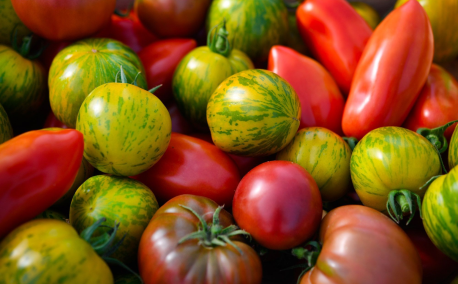
Growing tomatoes from seed opens the door to an exceptional variety of colours, shapes and flavours. From small cherry tomatoes and early outdoor varieties to large beefsteak types, success begins with choosing a variety suited to your growing conditions.
In temperate regions, good light, correct timing and protection from prolonged wet weather are especially important.
Browse our organic open-pollinated vegetable seeds and compare tomato varieties by earliness, growth habit and use.
Sow tomatoes indoors from late February to early April. March is usually ideal because improving light levels help produce compact plants that will be ready after the final frost.
Tomato seeds germinate best at approximately 20–25°C. After emergence, move seedlings to a very bright, slightly cooler position. Sowing too early in poor light produces weak, leggy plants.
Fill pots or a seed tray with fine, well-drained seed compost. Sow approximately 5 mm deep, cover lightly and water gently. Keep the compost moist but never saturated. Remove propagator covers as soon as seedlings emerge.
Germination normally takes one to two weeks.
When the first true leaves appear, move each seedling into its own pot. Handle it by a leaf rather than the stem and plant it deeply, up to the seed leaves. The buried stem will form additional roots.
Provide maximum light and water when the compost surface begins to dry.
Wait until the risk of frost has passed and night temperatures generally remain above 8–10°C. Harden plants off for one or two weeks, gradually exposing them to outdoor sun, wind and cooler temperatures.
Tomatoes need a warm, sunny site with fertile, well-drained soil and good airflow. Space plants approximately 50–70 cm apart. Closer spacing slows leaf drying and increases disease risk.
Ventilate greenhouses daily. For outdoor growing in cooler climates, favour early varieties capable of ripening during a shorter summer.
Water thoroughly but less frequently to encourage deeper roots. Direct water towards the soil and keep leaves dry.
Large fluctuations between drought and heavy watering may cause fruit splitting and blossom-end rot. Mulching helps maintain more consistent soil moisture.
Indeterminate tomatoes continue growing and are normally trained up supports. Removing some sideshoots can improve airflow and make the plants easier to manage.
Determinate or bush tomatoes remain more compact and are not normally pruned in the same way. Pruning is not essential in every situation; its main benefit in a humid climate is improved ventilation.
Well-rotted compost incorporated before planting often provides a good start. Too much nitrogen produces abundant leaves but fewer flowers and fruits. Once fruiting begins, tomato plants require proportionally more potassium.
Allow sufficient space between plants.
Ventilate greenhouses every day.
Water the soil rather than the foliage.
Remove leaves touching the ground.
Avoid handling wet plants.
Check regularly for discoloured spots.
Remove heavily affected material promptly.
Pick tomatoes when they have developed their characteristic colour and detach easily. Avoid refrigerating ripe tomatoes because cold temperatures reduce flavour and affect their texture.
Seeds can be saved from open-pollinated tomato varieties. Select a healthy, fully ripe fruit that is typical of the variety. Ferment the seeds and surrounding gel in a little water for several days, rinse them thoroughly and allow them to dry completely. Label them with the variety and harvest year, then store them somewhere cool, dry and dark.
Cycle en terre | Company number : 1012.992.972 | Legal information & Contact | General terms and conditions
Terms of use of website | Cookies | Personal Data | Processing of your data by Google
© Copyright 2024-2026 - e-net. - your strategic and digital transformation agency
Subtotal of your cart (0 items) Subtotal of your cart (1 item) :