 Français
 Nederlands
 English

Product successfully added to your shopping cart
Subtotal of your cart (1 item) :
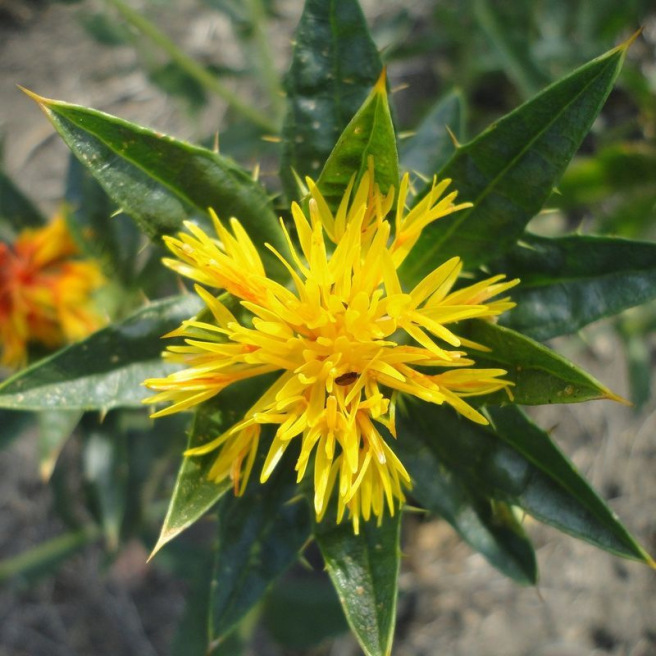
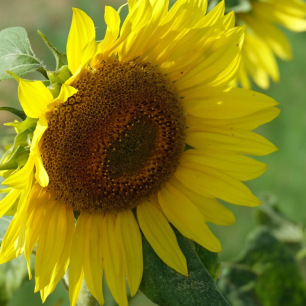
Add color and uniqueness with Safflower, a thistle-like plant. Orange-red flowers turning yellow, an oilseed and bee-friendly crop. Young leaves can be eaten in salads.
Availability date:
Data sheet
Direct sowing outdoors
Harvest
| Sowing density | 9 g/10m² |
| Latin name | Carthamus tinctorius L. |
| Life cycle | Annual |
| Edible part | Petals |
| Sowing depth | 1cm |
| Growing period | 60 - 90 days |
| Spacing | 30 x 30 cm |
| Exposure | Sun |
| Soil type | Well-drained soil, Light soil |
| Ease of cultivation | Easy |
| Medicinal | Yes |
| Edible flowers | Yes |
| Watering | Regular |
| Reference | 374 |
More info
Sow the Dye Safflower (Carthame des Teinturiers) in seed trays or directly in the ground from April to May, at 1–2 cm depth and 15–20 °C. Transplant or thin out by spacing plants 25–30 cm apart. It thrives in well-drained, poor soil and blooms from July to September.
Combinations available
|
This product is no longer in stock |
4,16 € | |||
|
This product is no longer in stock |
50,77 € | |||
|
This product is no longer in stock |
5,57 € | |||
|
This product is no longer in stock |
9,01 € | |||
|
This product is no longer in stock |
14,42 € | |||
|
This product is no longer in stock |
29,47 € | |||
|
This product is no longer in stock |
50,77 € | |||
|
This product is no longer in stock |
89,99 € |
Questions / Answers
1 question
Question from jean-pierre
Answer from Cycle en terre
Bonjour Jean-Pïerre,
Le carthame (Carthamus tinctorius) est comestible, mais tout dépend de la partie utilisée et de l’usage :
? pétales :
comestibles, surtout utilisés secs comme colorant naturel ou épice (on l’appelle parfois le faux safran). Goût léger, légèrement amer. Utilisé en infusion, riz, fromages, pâtisserie.
? graines :
comestibles après transformation. Elles servent surtout à produire l’huile de carthame, une huile alimentaire riche en acides gras insaturés.
? crues, les graines ne sont pas vraiment consommées telles quelles (dures, peu digestes).
? jeunes feuilles :
parfois consommées comme légume dans certaines cultures, mais usage très marginal.
Reviews
You must log in to give a review
Log inCustomers who bought this product also bought:
Cycle en terre | Company number : 1012.992.972 | Legal information & Contact | General terms and conditions
Terms of use of website | Cookies | Personal Data | Processing of your data by Google
© Copyright 2024-2026 - e-net. - your strategic and digital transformation agency
Subtotal of your cart (0 items) Subtotal of your cart (1 item) :