 Français
 Nederlands
 English

Product successfully added to your shopping cart
Subtotal of your cart (1 item) :

Published on 21/05/2026
Reading time:4 minutes
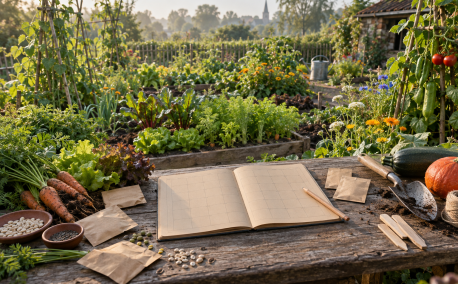
In a kitchen garden, certain plants naturally help each other. Some flowers attract pollinators, repel pests or help protect the soil. Vegetables benefit from this balance and often grow better with fewer pest and disease issues.
These plant combinations do not replace healthy soil, crop rotation or good growing conditions… but they do help create a more resilient and balanced garden. They also make the vegetable garden far more vibrant and enjoyable.
At this time of year, after the risk of late frosts has passed, it is the perfect moment to plant these combinations outdoors.
Flowers play several important roles in the garden:
In a diverse garden, natural balances are often easier to establish.
This is probably the best-known companion planting combination.
Marigolds attract beneficial insects and their roots may also help reduce certain soil nematodes.
They fit perfectly between tomatoes, peppers and aubergines.
A few tips:
Nasturtiums strongly attract aphids. While that may sound negative, they often work as a “trap crop”, diverting pests away from nearby vegetables.
They work particularly well near:
Their flowers are also edible and highly decorative in summer salads.
Calendula is one of the most useful flowers for a vegetable garden:
It pairs particularly well with:
It is also perfectly suited to natural, low-maintenance gardens.
Some flowers do not directly protect vegetables, but they greatly increase pollinator and beneficial insect activity.
Cosmos, zinnias, cornflowers and wildflower mixes help create a far more vibrant garden ecosystem.
In Belgium and northern France, these flowers generally cope very well with variable summers and often continue flowering into autumn.
Even a few flowering strips can make a significant difference.
Certain herbs integrate perfectly among vegetables:
Allowing some herbs to flower greatly increases their ecological value.
There is no need for a complicated design.
The simplest approach is often to:
A living kitchen garden rarely looks perfectly structured — and that is often part of its charm.
Some flowers become quite large during summer. Maintain good airflow around tomatoes and squash plants to reduce humidity and disease pressure.
Highly double flowers are often less attractive to pollinators. Single flowers are usually much more beneficial.
Companion planting works together with biodiversity, soil life, climate and crop rotation.
These combinations are not miracle solutions, but they do help create a more resilient and balanced garden.
Combining flowers and vegetables completely changes the atmosphere of a kitchen garden.
The garden becomes more colourful, lively and pleasant… while naturally supporting biodiversity and ecological balance.
And that is very much the spirit of a living garden: growing food, observing nature, experimenting and making space for diversity.
Cycle en terre | Company number : 1012.992.972 | Legal information & Contact | General terms and conditions
Terms of use of website | Cookies | Personal Data | Processing of your data by Google
© Copyright 2024-2026 - e-net. - your strategic and digital transformation agency
Subtotal of your cart (0 items) Subtotal of your cart (1 item) :