 Français
 Nederlands
 English

Product successfully added to your shopping cart
Subtotal of your cart (1 item) :
Published on 15/01/2026
Reading time:8 minutes
Growing vegetables from seed gives you access to a far wider choice of varieties. You decide exactly what to grow, how many plants you need and when to start them. It also allows you to follow the whole process from a tiny seed to a productive plant.
Successful seed sowing is not particularly complicated. The key is to provide the right balance of moisture, temperature, oxygen and light for each crop.
If you are unsure when to begin, consult our vegetable sowing calendar to see what you can sow each month in a temperate European climate.
Growing your own seedlings has many advantages:
You do not need a large greenhouse or professional equipment. For many crops, clean containers, suitable seed compost, good light and regular care are enough.
A seed contains the reserves it needs to begin growing. To germinate, it mainly needs water, oxygen and a suitable temperature. Once the seedling emerges, light becomes essential.
Water activates the seed and starts the germination process. Seed compost should remain moist but never saturated.
Dry compost may interrupt germination. Constantly wet compost contains too little oxygen and increases the risk of rotting and damping-off.
After sowing:
Remove or open the cover as soon as the first seedlings appear.
Different vegetables need different temperatures.
| Crop group | Indicative germination temperature |
|---|---|
| Lettuce, spinach and peas | 10–18°C |
| Cabbages, onions and leeks | 15–20°C |
| Carrots, beetroot and radishes | 15–22°C |
| Tomatoes | 20–25°C |
| Aubergines and peppers | 22–28°C |
| Squash, courgettes and cucumbers | 20–25°C |
These temperatures are mainly important during germination. Once seedlings emerge, slightly cooler conditions generally produce sturdier, more compact plants.
A heated propagator or heat mat can help with aubergines and peppers. Remove the extra heat after emergence and provide plenty of light.
Seeds also need oxygen. Use fine, open and well-drained seed compost rather than dense or waterlogged soil.
Do not press the compost down too firmly. Gentle pressure is enough to create contact between the seed and the growing medium.
Once seedlings appear, they need as much light as possible. Insufficient light produces tall, thin and pale seedlings, often described as leggy.
Place seedlings:
In January and February, waiting a little longer is often better than raising weak plants in poor light.
Good seed compost should be:
Very rich compost does not improve germination. During its earliest development, the seedling mainly uses the reserves stored inside the seed.
For very small seeds, sieve the upper layer to create a fine, even surface.
As a general rule, cover a seed with compost to approximately two or three times its own thickness.
Seeds sown too deeply may exhaust their reserves before reaching the surface. Seeds sown too shallowly can dry out rapidly.
Always follow the guidance provided for the individual variety.
Work backwards from the likely outdoor planting date.
Tomatoes, aubergines and peppers need a long growing period and are started relatively early in warm conditions. Courgettes, cucumbers and squash develop much faster and generally only need to be sown three or four weeks before planting out.
Earlier sowing does not necessarily produce an earlier harvest. A younger plant raised in good light can quickly overtake an older seedling weakened by poor conditions.
| Method | Principle | Suitable crops |
|---|---|---|
| Seed tray | Several seeds in one tray, later transplanted | Lettuce, cabbages, leeks and tomatoes |
| Module tray | One or a few seeds in each cell | Lettuce, cabbages and herbs |
| Individual pots | Each plant grows separately | Tomatoes, aubergines, peppers and courgettes |
| Station sowing | Several seeds placed together | Beans, peas, squash and cucumbers |
| Row sowing | Seeds distributed along a shallow drill | Carrots, radishes, turnips and spinach |
| Broadcast sowing | Seeds scattered over a prepared surface | Green manures and some leafy vegetables |
| Direct sowing | Seeds sown where the plants will grow | Carrots, parsnips, radishes, peas and beans |
Root vegetables such as carrots and parsnips are normally sown directly because transplanting can damage their main roots.
Seed trays are practical for seedlings that will later be pricked out. Module trays keep roots separate and make transplanting easier. Individual pots suit fast-growing crops and plants that dislike repeated disturbance.
All containers must have drainage holes.
A propagator or transparent cover maintains humidity and warmth during germination. Ventilate it daily and remove the lid after seedlings emerge.
Bottom heat is useful for tomatoes, aubergines and peppers. Once they have germinated, strong light becomes more important than continued high temperatures.
A soil blocker creates free-standing blocks of compost, reducing the need for plastic pots and limiting root disturbance. Soil blocks dry out more quickly, so their moisture must be monitored carefully.
Remove the propagator lid as soon as seedlings appear. Prolonged warmth and humidity increase the risk of fungal diseases.
Move seedlings immediately to a bright position. Rotate containers regularly if the light comes from only one direction.
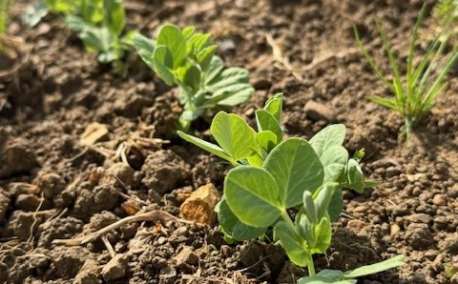
Seedlings growing too closely together compete for light, water and nutrients. Keep the strongest and remove the surplus plants.
Seedlings grown together are generally ready to prick out when their first true leaves appear after the seed leaves.
Handle a young plant by a leaf rather than by its delicate stem. A damaged leaf can be replaced; a crushed stem usually cannot.
Tomatoes can be transplanted more deeply because their stems are able to form additional roots.
Damping-off causes young seedlings to collapse at soil level. Affected seedlings usually cannot be saved.
Reduce the risk by:
Possible causes include:
Radishes may germinate within a few days, while parsley, parsnips and some herbs can take several weeks. Allow enough time before assuming that a sowing has failed.
Plants raised indoors are not immediately ready for full sun, wind and cold nights.
Begin approximately one or two weeks before planting:
A good seedling is not necessarily the tallest or earliest. Look for a plant that is:
A balanced young plant normally establishes more quickly than an oversized seedling raised in excessive warmth or insufficient light.
Choose your favourite varieties from our range of organic, open-pollinated vegetable seeds and start growing.
Cycle en terre | Company number : 1012.992.972 | Legal information & Contact | General terms and conditions
Terms of use of website | Cookies | Personal Data | Processing of your data by Google
© Copyright 2024-2026 - e-net. - your strategic and digital transformation agency
Subtotal of your cart (0 items) Subtotal of your cart (1 item) :